

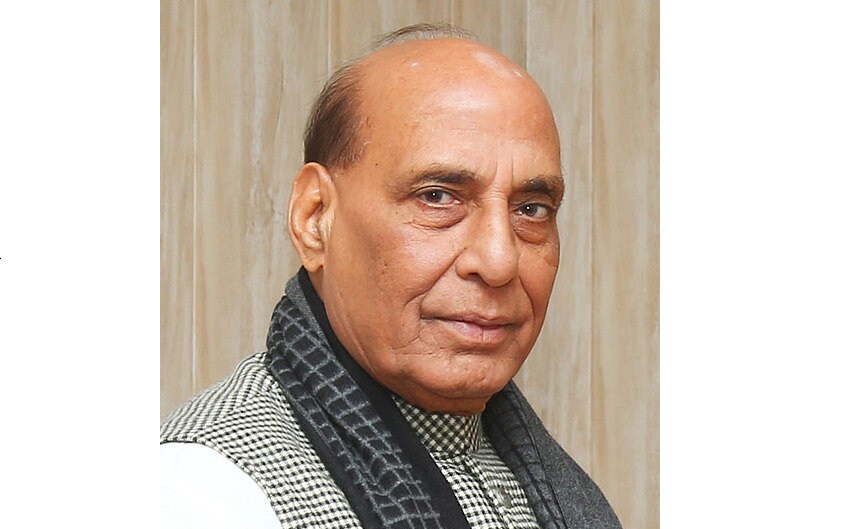
In a call to arms for the newly trained officers of the Indian Air Force, Defense Minister Rajnath Singh urged them to prepare for future security challenges, highlighting the rapidly evolving nature of modern warfare. Addressing the 217th Combined Graduation Parade at the Air Force Academy in Hyderabad, Singh emphasized the crucial role of technology, innovation, and adaptability in achieving military success, which now extends beyond reliance on traditional weaponry.
Congratulating the cadets on completing their training, Singh remarked on the onset of a new chapter in their military careers. He stressed the importance of aligning with the evolving security environment and the necessity of embracing new technologies. By adapting to changing circumstances, these officers will be better equipped to safeguard the nation.
Singh reflected on the storied history of the Indian Air Force, underscoring its significant contributions to national security. He recounted the pivotal roles played by the Air Force during the Kashmir Airlift operation and the 1971 war, recalling how these efforts bolstered India’s defense capabilities. Such historical benchmarks serve as reminders of the Air Force’s enduring impact on the nation’s security.
Highlighting recent achievements, Singh mentioned Operation Sindhur, where the Air Force showcased precise planning and effective execution. He pointed out that the success of any military operation hinges on the balanced use of modern technology and well-trained human resources. This balance is crucial as the role of drones, satellites, sensors, cyber systems, and robotic technologies continues to expand in contemporary conflicts.
Singh also addressed the growing threats posed by cyberattacks and digital network vulnerabilities. He underscored the necessity for military officers to develop proficiency in technical and cyber capabilities to counter these emerging threats. With confidence in the training received at the Air Force Academy, Singh expressed optimism that these young officers are well-prepared to face complex and unpredictable future scenarios. He concluded by asserting that the armed forces that stay ahead will be those that integrate new technologies into their strategies in a timely manner.